 Last week, when I was walking home from the station, I noticed lots of political ads posted everywhere. Then I heard campaign promises being blared out of vans driving around. A few rival candidates were set up near the station wearing a beauty-pageant-looking banners strung across their chests. They spoke into a mic while their entourage handed out fliers. Yup, it was time for local elections again. The candidates were running in the May 26, 2019 election for City Council of Adachi ward in Tokyo.
I recognized most of the political parties, but one made me do a double take: Protect the Nation from NHK Party.
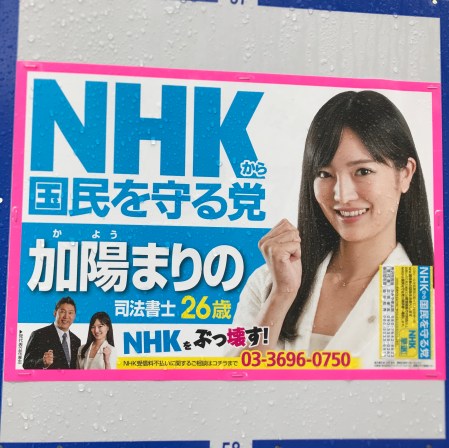
I thought I must have read it wrong. Maybe I was confusing the Japanese. I did a quick check online and sure enough, I was right. It was a party whose mission was to protect the people of Japan from NHK. Considering that NHK is Japan’s national public TV channel, it seemed an odd choice for a party name. Don’t get me wrong, I’ve got no love for NHK. And I had a pretty good idea why Ms. Kayo and her party were against it.
NHK has this terrible policy of sending out fee collectors to pressure people into signing a contract. And they have the support of the government to do it. The Broadcast Law of Japan says if you own a TV, you are required to pay. But it’s trickier than that because they have no legal course of action against you, until you sign the contract. If you sign the contract and fail to pay, NHK can sue for breach of contract. But if you never sign a contract there’s nothing they can do. Except ring your doorbell again and again and keep bothering you until you finally sign. From my foreign perspective, it’s a rather weird situation.
When I first moved to Japan of course, I didn’t know about this and when NHK came to my door with their official government documents, and pushy ways, I signed the dotted line. They even had it written out in English so people like me couldn’t play dumb.
The next day, I asked my Japanese friends about it and they said, “No! Don’t sign. You should never sign.” Lesson learned.
Marino Kayo and the Protect the Nation from NHK Party to the rescue. Their mission is to put an end to those high pressure, NHK contracts. And while I fully support ending that system, it still seems odd to have that be your entire campaign platform. I mean, I would get that being one of their campaign promises, but the whole shebang? And why make it the name of your party? If you succeed, won’t you have to rename the party? I was curious and had serious questions for Ms. Kayo.
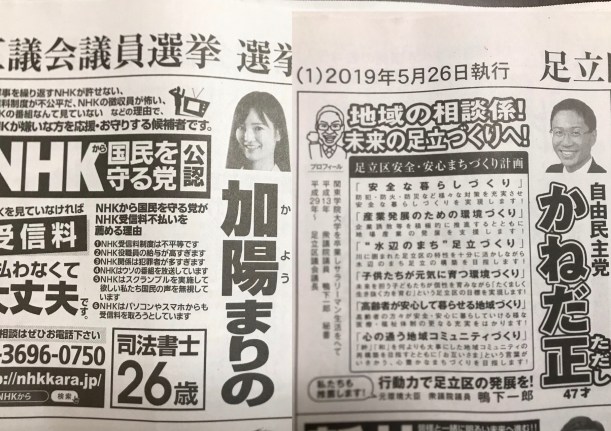
That night I found an election newspaper in my mailbox. The entire newspaper was divided into square boxes with each candidate getting one box to promote themselves. I looked up Ms. Kayo and learned a clever marketing technique. If you’re 26, (like she is) write your age big and bold and place it prominently in the ad. If you’re my age, use small print and hide it near the bottom.
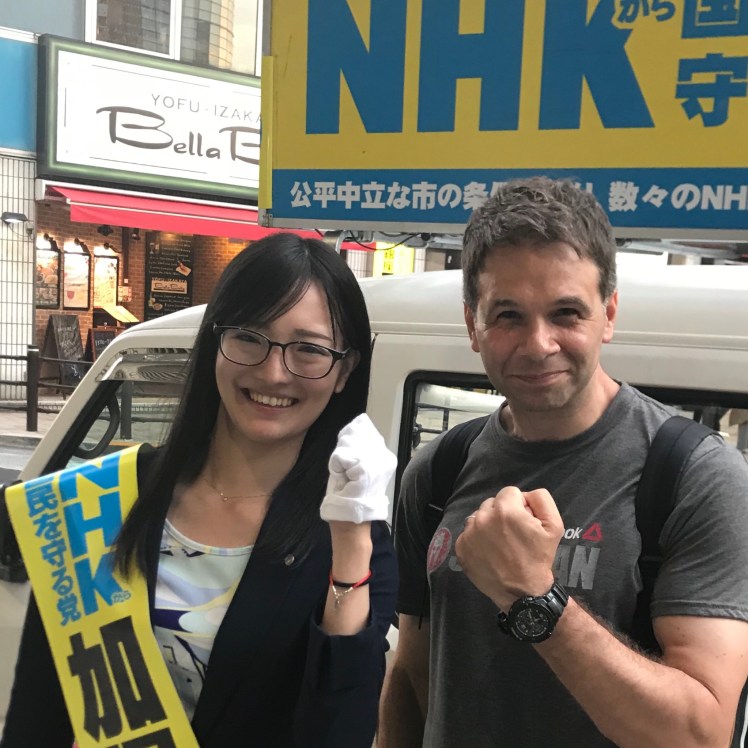
At this point I was truly curious how the party could place such limits on itself. Why do that? Returning home the next night, I got my chance. I saw her giving a speech in front of Kita-Senju station, surrounded by her staff. I spoke to the staff as friendly as I could and they invited me to speak with her directly. When she finished her speech, she came over and we had an interesting chat.
Once she saw that I could speak Japanese and agreed with her about those pesky NHK people, we seemed to be on good terms. I could finally ask my questions:
Me: I was surprised when I saw the name of your party. If you succeed in ending the NHK people from harassing everyone with those contracts and fees, won’t you have to re-name the party? Why not just have that be one of the agenda?
Kayo: This isn’t a political party in the general way you’re thinking. For these kinds of local elections, sometimes parties form over a particular issue. Once our party reaches its goal, it will will simply disband. It won’t be re-named, it will just end.
Fair enough I guess. It sounds more like an activist group than a political party though. Maybe I just don’t get Japanese local politics.
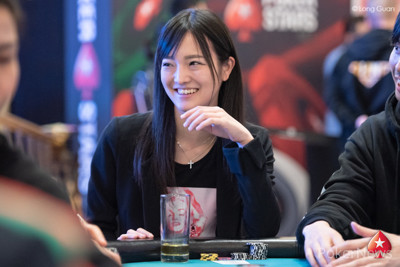
She came across as friendly and intelligent, and she was cool to talk with. Also, if she happens to lose the election, I think she’ll be fine. She currently works as both a lawyer and a professional poker player. She’s very impressive, especially at only 26.
 Robert R. Gray
It is refreshing to see a political party formed to address an issue and then disappear.
It is totally altruistic , no power of profit motive as in most political parties . Good for her.
Twenty years ago living in Matsumoto , I also experienced fending off NHK. They would
arrive and give you the impression that you were breaking the law if you had a t.v. and
did not sign up. I remember reading an article in ,The Japan Times” about this tactic by
NHK and the author informing the reader that NHK had no authority to sign you up.
LikeLike