I wanted to share the story of three remarkable people I met during my trip to Fukushima—a cattle farmer, a flower grower and an artist. They’re each helping Fukushima recover in very different ways.
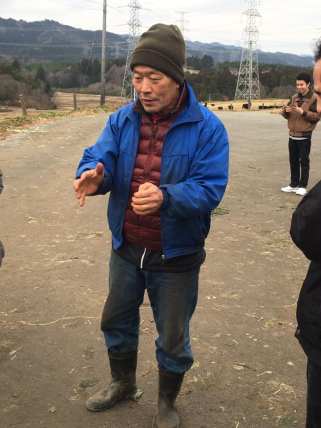
The first is Masami Yoshizawa, a farmer who calls himself “Cow-Godzilla.” He’s an active protestor who defied a government order to slaughter his cows. When radiation from the nuclear disaster contaminated his cows, the government ordered that he kill them. The authorities said that people could let their cats, dogs, and other pets affected by the radiation live, but not the cows. He said, “If cats and dogs can be allowed to live, why not cows?” Cow-Godzilla defied the order and committed himself to saving them.
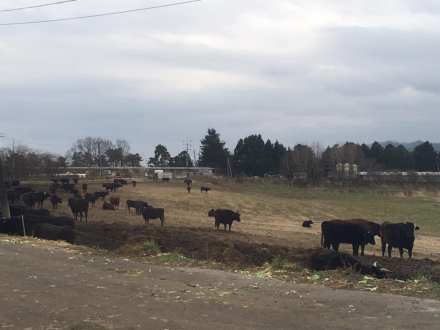
The cows were contaminated and he knew he could never sell them, but they were not suffering. Although he raised cattle for slaughter before the disaster, he says there is a big difference between killing them for food, and killing them because they are no longer useful. Eight years later, he is still caring for his 300 cows.


The cows also serve as a reminder of what happened. He himself had radiation poisoning early on, but his body gave off the radiation over time. Recent hospital tests show that he has gone back to normal. He said that that radiation gave him the power to fight against the government and nuclear power. That’s where he got the idea for his name, “Cow-Godzilla.”
He speaks with passion and anger. He also frequently protests in Tokyo. His goal is to get all nuclear power plants in Japan to shut down. “I only want us to be responsible for what happened in Fukushima in 2011,” he said. He asked us to help spread his story.
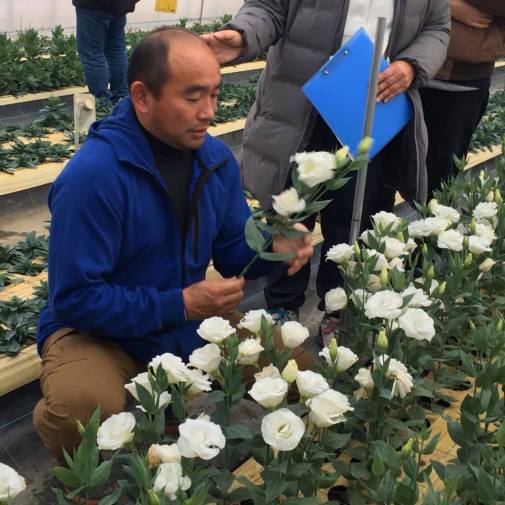
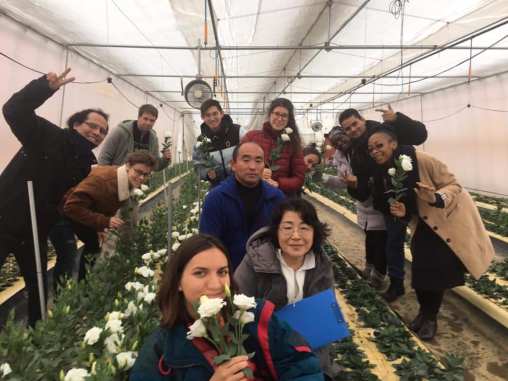
In contrast to the understandably-angry Cow-Godzilla, the next person we visited was gentle and soft spoken. He was an incredibly warm, kind-hearted man named Mr. Arakawa. Before the disaster, he was a rice farmer. He got evacuated when the disaster struck, and then he returned once the evacuation was lifted. But instead of going back to rice, he decided to grow flowers as a symbol of hope and peace. He wants to help heal the people of Fukushima.
The last person we met with that day was an artist named Tadashige Shiga. His project is called the Cherry Blossom Project and was started in May 2011.

Cherry blossoms are a symbol of hope and renewal. The project is to plant 99,000 cherry blossom trees across the hills of Iwaki City in Fukushima. Once completed, it will be the biggest cherry blossom area in the world. But he says completing it is not the important thing. The important thing is enjoying the process. When the cherry blossoms flower, they lift people’s spirits.
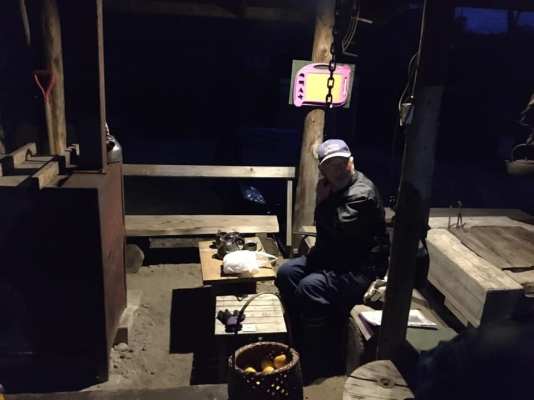
“Actually planting a cherry tree, caring for it, brings peace to your heart. That’s been a realization of mine. The people who participate in our cherry blossom project feel that for themselves. They get a new perspective on the joy of life and I want that to be passed down to future generations. I would be happy if this project makes people think about the true meaning of happiness. I think about that every day.” —Tadashige Shiga
 Robert R. Gray